
Senegal kingfisher
Its plumage is beautifully white on the belly. The back is a brilliant blue, and the wings are colored blue and black. The kingfisher’s beak is red on top and black on the bottom, and its legs are a striking red.
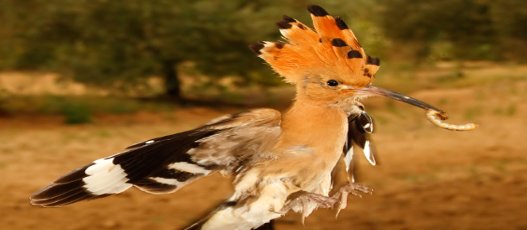
Appearance
Its plumage is beautifully white on the belly. The back is a bright blue and the wings are colored blue and black. The kingfisher's beak is red on top and black on the bottom, and the legs are bright red.
Habitat
The preferred area of the Senegal kingfisher extends from West Africa to the Marquesas Islands. In contrast to other kingfisher species, it only occurs in Africa. You can even admire the bird in Kruger National Park. It usually lives in pairs with its partner, with whom it forms a lifelong bond, but sometimes in threes. Actually, it is a pronounced loner. The area in which the kingfisher has its territory is fiercely defended by it. The Senegal kingfisher is very aggressive and does not hesitate to energetically drive away other birds.
Diet & Breeding
The bird is also known as a very skillful hunter. Its diet is varied. It includes everything from rodents to snakes and lizards, to the praying mantis. Beetles, grasshoppers, and butterflies are also not disdained by the Senegal kingfisher. During courtship, the female is wooed by the male with prey animals that he catches especially for her. He feeds her with them in small portions. For the nest, which is usually set up in a tree hollow, the birds like to use materials such as stalks and grasses. The eggs are warmed alternately by both parents. Both partners are also responsible for raising the young birds. These kingfishers lay eggs twice per breeding season. So far, the Senegal kingfisher is not yet threatened with extinction. In most parts of its vast range, it is even very common.


