
Afrikaners: Who are the Boers?
Afrikaners, also known as Boers, are a population group of European descent in South Africa and Namibia. Their history and culture continue to shape the region today.
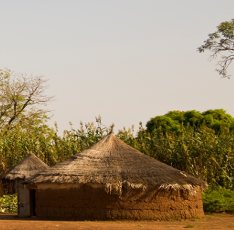
The Afrikaners – also known as Boers in South Africa and Namibia – are a population group of European descent whose roots go back to the early colonial period. Their history is closely linked to the settlement of southern Africa, and their cultural traces are still visible in the region today. Who the Afrikaners are, how they lived, and what travelers can learn about them and their traditions today is shown in this portrait.
Origin and History of the Afrikaners
The ancestors of the Afrikaners migrated from the Netherlands, Germany and France to South Africa from the 17th century onwards. The first settlers, mainly Dutch, arrived in 1652 with Jan van Riebeeck at the Cape of Good Hope and founded the Cape Colony. Over time, the immigrants mixed with other European groups as well as with Indian and Malay slaves brought to the country by the Dutch East India Company. From this multicultural encounter, a distinct, creole-influenced identity developed.
In the 19th century, many Afrikaners – already referred to as “Boers” – moved inland to escape British colonial rule. This “Great Trek” led to the founding of independent Boer republics such as the Republic of Natalia, the Orange Free State and the South African Republic (Transvaal). After the Second Boer War (1899–1902) against the British, these republics lost their independence, but the Boers retained a strong cultural and political influence.
Today, most Afrikaners live in South Africa, especially in the Western Cape Province, as well as in Namibia, where they form a smaller but influential minority. Their history remains the subject of controversial debates, particularly in connection with the apartheid era, in which Boer policy played a central role.
Language and Culture: Afrikaans as a Mark of Identity
Afrikaans is the most important linguistic legacy of the Afrikaners. It developed from 17th-century Dutch and adopted numerous loanwords from Malay, Khoisan languages and later also from English. Today, Afrikaans is one of South Africa’s 11 official languages and is spoken as a mother tongue by about 7 million people. In Namibia, it is recognized as a minority language.
The culture of the Afrikaners is shaped by a blend of European tradition and African influence. Typical are the so-called “Boerekos” – rural dishes such as bobotie, biltong or koeksisters – which are still served in many households and restaurants today. Music, especially “Boeremusiek”, a traditional style featuring accordion and guitar, as well as traditional clothing with its characteristic hats and vests, are also integral parts of Boer identity.
Religiously, most Afrikaners are Christian, with the Dutch Reformed Church playing a central role. It shaped social and political life among the Boers for centuries and remains present in many communities today.
Way of Life Today: Between Tradition and Modernity
The reality of life for Afrikaners has changed greatly in the 21st century. Many now live in cities such as Cape Town, Pretoria or Windhoek and work in commerce, education or administration. Nevertheless, some families still uphold rural traditions, particularly in the wine-growing regions of the Cape or on farms in the interior.
Agriculture, especially wine growing, remains an important economic sector shaped by many Afrikaners. The South African Winelands around Stellenbosch, Franschhoek and Paarl are considered the heart of Boer heritage: it was here that the first vineyards were planted in the 17th century, and many wineries are still family-run today. The architecture of the region – with its white gabled houses and historic wine estates – also reflects Boer influence.
At the same time, Afrikaners today are a heterogeneous group. While some consciously hold onto their Boer identity, others see themselves as South Africans or Namibians without ethnic affiliation. The political landscape has changed, but cultural traces remain visible, such as in language, cuisine or festivals like “Voortrekkersdag”, which commemorates the Great Trek.
Travel Connections: Where the Heritage of the Afrikaners Can Be Experienced
For travelers, South Africa and Namibia offer numerous opportunities to experience the cultural heritage of the Afrikaners. Particularly rewarding are visits to the historical centers of Boer settlement:
- Cape Town and Surroundings: The Castle of Good Hope, the oldest preserved building in South Africa, was built in 1666 by Jan van Riebeeck and is a central site of Boer history. Nearby lies Groot Constantia, the country’s oldest wine estate, founded in 1685 by Simon van der Stel, a Dutch governor. The route from Cape Town via Stellenbosch to Franschhoek takes you through the picturesque Winelands, where many wineries are still run by Boer families.
- Stellenbosch and the Winelands: The university town of Stellenbosch is considered the intellectual and cultural center of the Afrikaners. Not only is Afrikaans spoken here, but Boer history is also taught. Many wineries such as Spier or Lanzerac offer tours that provide insights into the tradition of winemaking. In Franschhoek, the Franschhoek Motor Museum invites visitors on a journey through time with its collection of historic vehicles.
- Orange Free State and Transvaal: In the former Boer republics, traces of Boer settlers can still be found. In Bloemfontein, the Anglo-Boer War Museum deals with the conflict between Boers and the British. In Pretoria, the Voortrekker Monument commemorates the pioneers of the Boers and is an important national monument.
- Namibia: In Windhoek and Swakopmund, there are also Boer influences, such as in architecture or cuisine. Particularly in southern Namibia, in the region around Keetmanshoop, many Boers lived as farmers, whose heritage can be traced in museums and on farms.
A special experience is taking part in a Boer braai – a barbecue that is a fixed part of the culture in South Africa and Namibia. Here, traditional dishes such as biltong (dried meat) or sosaties (meat skewers) are prepared, and guests can immerse themselves in the convivial atmosphere.
Afrikaners and the Legacy of Apartheid
When dealing with Africans, the history of apartheid cannot be ignored. The apartheid regime, which ruled South Africa from 1948 to 1994, was significantly shaped by the Boer National Party. The policy of racial segregation and oppression shaped the country for decades and left deep wounds in society. Many Africans were both perpetrators and victims of this system, and addressing the past remains a sensitive process to this day.
Today, some initiatives are dedicated to critically examining Boer history, for example through museums, educational projects, or cultural events. At the same time, there are efforts to positively convey African cultural heritage—such as through the promotion of Afrikaans literature or the preservation of historical sites.
Conclusion: A complex legacy
The Afrikaners or Boers are a group with a multifaceted history, shaped by European immigrants, African influences, and colonial experiences. Their language, cuisine, architecture, and festivals remain visible testimonies to this heritage. At the same time, they are part of a modern, diverse society in which grappling with the past plays a central role.
For travelers, the regions of South Africa and Namibia where the Afrikaners lived and worked offer unique insights into a culture that has profoundly shaped southern Africa. Whether in the vineyards of the Cape region, on historic farms, or in the cities—the traces of the Boers are everywhere to be found and invite discovery.


