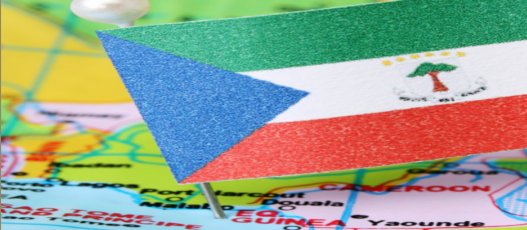
The Republic of Equatorial Guinea is a country in Central Africa. It covers an area of 28,051 square kilometres and is home to more than 690,000 people.
The majority of the population, about 70 percent, lives on the mainland, while 30 percent reside on Bioko Island. The official languages of Equatorial Guinea are French and Spanish. The country is the only one in Africa where Spanish is spoken. In addition, the Bantu languages Bubi and Fang are widely used. Around 80 percent of the population are Roman Catholic, with other Christian, animist and Muslim communities also present.
Highlights of Equatorial Guinea
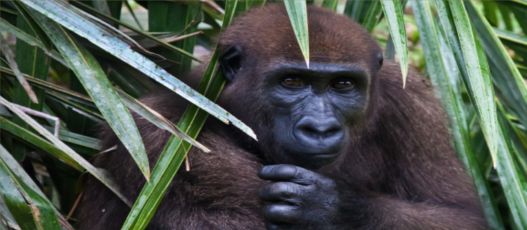
Tourism in Equatorial Guinea is still underdeveloped, but it is possible to travel to all regions, though some require a special permit. Among the country’s many attractions is Pico Basilé, a volcano over 3,000 metres high on Bioko Island. The village of Batété is a popular starting point for exploring the region’s many crater lakes and forest trails. Other well-visited sights include the palm-fringed sandy beaches, the rainforest and Monte Alen National Park.
In Malabo and Bata, there are many old colonial-era buildings that bear witness to the country’s Spanish past. In Malabo, the presidential palace and the impressive Luís Segarra Llairadó Cathedral are also worth seeing. The cathedral, built in 1916 in the Gothic style, is a notable landmark.
Location and Climate of Equatorial Guinea
Equatorial Guinea consists of the mainland, the large island of Bioko and several smaller islands. It borders Cameroon to the north, Gabon to the east and south, and the Gulf of Guinea of the Atlantic Ocean to the west.
Equatorial Guinea has a predominantly humid tropical climate year-round, with high humidity and temperatures. The average annual temperature is around 25°C. On the mainland, there are two rainy seasons: the first runs from February to June, and the second from September to December. This period also brings the risk of hurricanes and tornadoes. On Bioko Island, there is only one main rainy season, from May to October. The driest time to visit is generally considered to be from November to April, as heavy rains can make roads muddy and difficult to travel.
Entry and Travel
Equatorial Guinea is easily accessible by air via Malabo International Airport, which is served by direct flights from Frankfurt am Main and other European airports. There are also flight and ferry connections between Bioko Island and the mainland. The country’s road network spans about 1,300 kilometres, of which 80 percent is paved.
To enter Equatorial Guinea, travellers need a passport and a visa, which must be obtained in advance from the Equatorial Guinean Embassy in Berlin. A yellow fever vaccination certificate is also required upon arrival. Before travelling, tourists should check whether any special permits are needed for their destinations, for example, to visit Pico Basilé on Bioko Island.