

According to estimates, around 19.8 million people live in Cameroon, and about 1.3 million of them reside in the capital Yaoundé. This capital is often also spelled Yaoundé.
According to estimates, around 19.8 million people live in Cameroon, and about 1.3 million of them reside in the capital Yaoundé. This capital is often also spelled Yaoundé. Cameroon’s population is composed of various ethnic groups, and alongside the official languages French and English, around 220 other languages or dialects are spoken in the country. About half of the population are Christians and around 20% are Muslims. In addition, there are also some followers of traditional religions in Cameroon.
Attractions in Cameroon
Many of Cameroon’s attractions can be discovered during a visit to the capital Yaoundé. These include, for example, the many museums, the vibrant markets, as well as the numerous cinemas and shops in the city. Just outside the city centre, there is also a casino, a large golf course, and garden areas.
Cameroon boasts a highly diverse landscape, with volcanic mountain ranges, the Atlantic Ocean coastline, vast plains in the interior, and highlands. Thanks to this varied landscape, Cameroon offers many opportunities for hiking or safari holidays. The safaris and hikes take visitors, for example, through vast savannahs or mountainous regions.
The country’s natural beauty can also be explored in its many national parks. In the Kala Maloue Reserve, for instance, the habitat of the elephants, monkeys, and antelopes living there is protected. In Waza National Park, the wildlife is particularly diverse, with lions, elephants, cheetahs, giraffes, porcupines, or antelopes.
Location and Climate of Cameroon
Cameroon is located in Central Africa and shares borders with Nigeria, the Central African Republic, Chad, the Democratic Republic of the Congo, Gabon, and Equatorial Guinea. In addition, Cameroon borders the Atlantic Ocean via the Bight of Bonny.
Cameroon has a tropical climate. Daytime temperatures average between 25 and 32 degrees Celsius. Rainfall can be expected throughout the year across the country. Even during the dry seasons, some regions may experience frequent rainfall. The dry seasons occur in the coastal region between December and January, in the interior highlands between December and February, and in the north between October and April.
Entry and Arrival
In Cameroon, there are two international airports: Douala International Airport and Yaoundé-Nsimalen International Airport. These airports are served by direct flights from several European countries, including Germany and Austria. In addition, Cameroon can occasionally be reached by ship. Entry is also possible by car or bus from neighbouring countries. If travel occurs during the rainy season, roads can often only be accessed by off-road vehicles.
For entry into Cameroon, German nationals require a valid passport and a visa. The visa must be applied for in advance at the Cameroonian embassy or the relevant honorary consulates. Upon arrival, proof of a valid yellow fever vaccination is also required. This proof must be provided by all travellers over six months of age. In some cases, additional proof of a cholera vaccination may be required. This vaccination certificate is often requested if entry is not via an international airport or if the traveller has previously visited a country where cholera cases have occurred.
Other countries in Central Africa
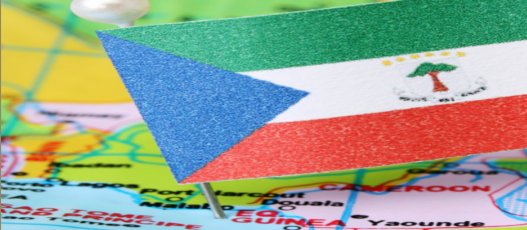
Equatorial Guinea
Mainland and islands in the Gulf of Guinea, covering 28,051 square kilometers.

Democratic Republic of the Congo
Second-largest country in Africa, Congo Basin and the river that divides the continent.
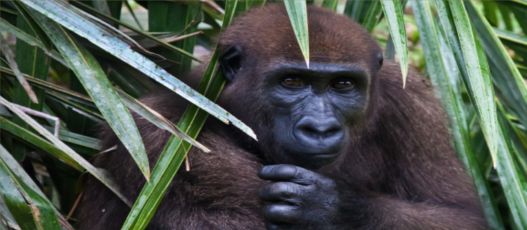
Gabon
Rainforest, coast and national parks in a comparatively sparsely populated country.


